Documentary

Saturday, February 23, 2013

Searching for Posada: His Workshop on Calle Moneda


Posada's Taller  (Workshop) c.1899
 
The image to the left is the way Posada's workshop looked about 1899. It is one of two photo images we have of the artist. Posada is on the right and it is generally agreed that the young man is Posada's son Juan Sabino Posada Vela who died in 1900. In our search for Posada we now believe that we know the identity of the third person in the photo. In the image below we see historians Agustín Sánchez González and Helia Emma Bonilla Reyna in front of the workshop as it is today. It is about three blocks from Mexico City's zocolo.
Posada's ex-Taller 2013

En la Taller de Editor Antonio Vanegas Arroyo


For the last week we have been filming in Mexico City, Leon and several sites within the state of Guanajuato, Mexico. In this photo we see one of the printing presses that beginning in 1880, produced thousands of images for the Vanegas Arroyo publishing house. Many were illustrated by José Guadalupe Posada. Until his death in 2001, Arsacio Vanegas Arroyo carried on the family tradition of printing. On top of the press is a little paper mache calavera dressed a luchador (wrestler) as Arsacio was also a well known combatant in lucha libre circles. It was that connection to lucha libre that helped result in Arsacio's support of the Cuban Revolution. In addition, to the left and behind the little calaverita is a photo of Constancio S. Suarez who wrote many of the stories and texts that Posada illustrated for Vanegas Arroyo.

Sunday, January 20, 2013

January 20, 2013 is the Centenario of José Guadalupe Posada's Death

 
His work with the burin was great
Thousands of images he did create,
Calaveras and politicos he sent with a din
With novenas and songs to sing
To el gran monton of bones
Giving all homes
Including himself from poor health.

RIP don Lupe y muchas gracias.
 

José Guadalupe Posada and Russian Filmmaker Sergei Eisenstein

It might be said that the events of history are the stones which we of the present use to shape the world in which we live. During the 1920s and 1930s, the famed Russian filmmaker Sergei Eisenstein discovered the images of José Guadalupe Posada who had passed away more than ten years earlier. At the time post-revolutionary Mexico was home to many Mexican artists and intellectuals—and also at least parttime to many ex-patriots including: Francis Toor, Jean Charlot, Upton Sinclair, Orson Welles, Katherine Anne Porter, Paul O'Higgins and Leon Trotsky—who were drawn to the sea change brought about by the upheavel resulting from the Mexican Revolution. Many cultural ideologies were challenged. Old was out and new thinking was called for in many areas of post revolutionary Mexico. During this time the renowned Soviet director Sergei Eisenstein came to Mexico to work on his film ¡Que Viva Mexico!

http://www.youtube.com/watch?feature=endscreen&v=bxTaFDYkigY&NR=1 Start watching at the Epilogo approximately 1:17:58.

Tuesday, September 25, 2012

Noticia Muy Triste: Joaquina Vanegas Arroyo ha Fallecido

At noon on Friday, September 21, 2012 passed from this life Joaquina Vanegas Arroyo, burdened by diabetes that caused the loss of one leg and other related health issues, she is at rest now. Granddaughter of don Antonio Vanegas Arroyo, who collaborated for 22 years with famed artist Jose Guadalupe Posada; beloved sister of Irma and reknowned lucha libre star brother, Arsacio, who together formed a partnership with Fidel and Raul Castro, “Che” Guevara and the Cuban Revolution, just like them, she made history for all of Latin America. She will be missed by those who knew and loved her.

Monday, September 3, 2012

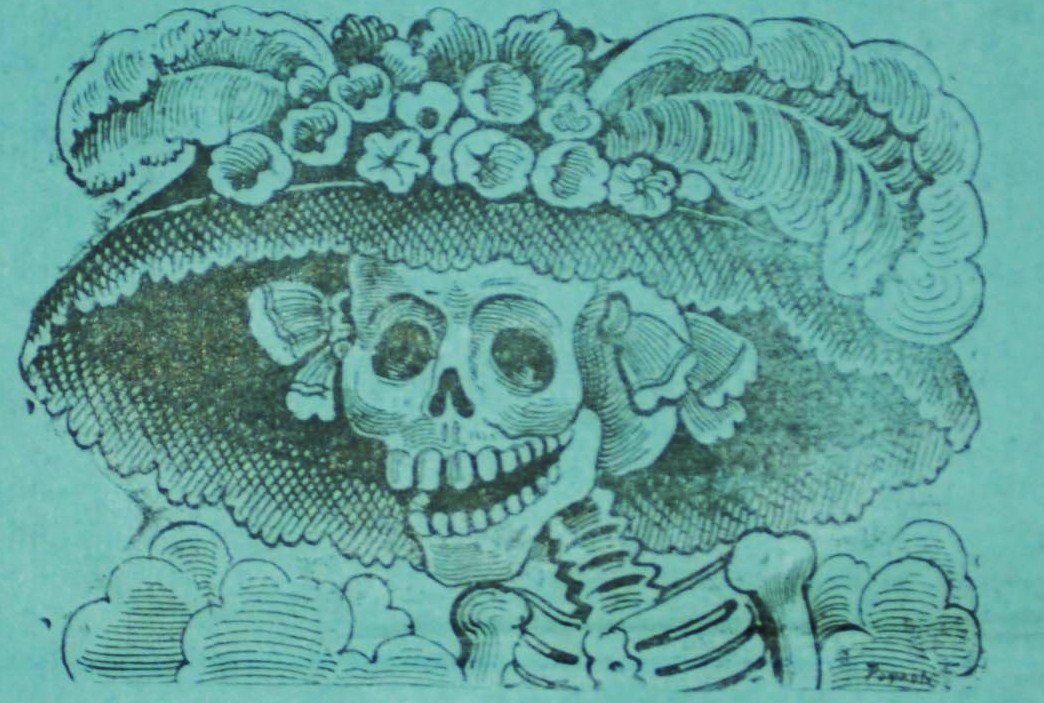
Happy Birthday to La Catrina (1912-2013), Jose Guadalupe Posada's Most Famous Calavera

Perhaps the most famous image that Posada created seen here is known today as La Calavera Catrina, which is the feminine of the Catrin or male dandy. The current year of 2012 marks the 100th anniversary of her first appearance in the publications of Antonio Vanegas Arroyo. Posada never illustrated her in any form other than as she appears here. As far as we know she appeared first in November of 1912, a mere three months before Posada died in January of 1913. But the popular image has since been portrayed countless times in full length. This credit perhaps goes to Diego Rivera who created a full-length version La Catrina in honor of Posada in his mural at the Hotel del Prado in Mexico City.

Friday, August 3, 2012

Museo Posada, Aguascalientes, Mexico

José Guadalupe Posada was born in Aguascalientes, Mexico in 1852. During the 61 years of his life until his death in 1913 he would great a legacy of artistic genius and ultimately become one of the most influencial artists in the history of Mexico let alone the world.

A visit to the museum and the beautiful state of Aguascalientes provides the visitor with an opportunity to see Posada's original engravings and hundreds of images made while in the employ of Antonio Vanegas Arroyo. It is a journey well worth the trip!

http://www.aguascalientes.gob.mx/temas/cultura/espacios/museos/m_posada.aspx