
Originally our blog followed the documentary film Searching for Posada--ART and Revolutions and it still does but now reports the latest José Guadalupe Posada events, exhibitions, film screenings and more from the Posada Art Foundation and others! www.posada-art-foundation.com
Showing posts with label Antonio Vanegas Arroyo. Show all posts
Showing posts with label Antonio Vanegas Arroyo. Show all posts
Wednesday, June 10, 2026
Excellent Resource for Printed Works Published by Antonio Vanegas Arroyo
https://literaturaspopulares.org/ipm/w/Inicio/ENGExcellent
This link will allow you to access Ibero-American popular prints, mainly from the 19th and early 20th centuries,from Mexico. It is a significant depository of works published by Antonio Vanegas Arroyo containing the images made by Jose Gudalupe Posada and Manuel Manilla.


Saturday, November 16, 2024
EUROPE MEETS MESOAMERICA -- A CULTURE CLASH OF SKULLS AND LETTERS
A talk looking at the blending impact of European printed works with indigenous imagery in the worlds of art and letters, including some reflections on how Jose Guadalupe Posada together with his main editor, Antonio Vanegas Arroyo created an amazing body of influencial work.
https://letterformarchive.org/shop/europe-meets-mesoamerica-a-culture-clash-of-skulls-and-letters/
Watch talk on VIMEO: https://vimeo.com/1045555379
Wednesday, December 27, 2017
Jose Guadalupe Posada: Legendary Printmaker of Mexico Exhibition

Catalina Island Museum exhibition open from Dec. 23, 2017 to April 8, 2018.
Mexican Art comes to Catalina Island for the first time in this exhibition celebrating Mexico’s most prolific artist. José Guadalupe Posada’s images captured all aspects of daily life in Mexico City from 1889-1913, directly influenced artist like Frida Kahlo and Diego Rivera, shaped the Mexican identity and continue to inform contemporary image making today. A wide representation of Posada’s work, including his famous Day of the Dead calaveras and the artist’s original printing plates, make up this first-of-its-kind exhibition.
The exhibition will feature text in English and Spanish.
Monday, September 23, 2013
Posada Ilustrates Pancho Villa and Firing Squad
 Posada sometimes used photographs as templates to create his illustrations. This allowed him a greater degree of control over the image. He could emphasize certain elements and also make the image more generic so it might be used over for a variety of stories that Vanegas Arroyo published. It also allowed his publisher the flexibility to see what news was current and then rehash it with its own artwork. In this example Pancho Villa is facing a firing squad. The image above left is from a halfsheet broadside published by Antonio Vanegas Arroyo. The image below is from the archives of the Hemeroteca Nacional in Mexico City, it is dated 1912, from the year before Posada's death. Note how efficiently Posada uses the space setting the image up in a way that draws the eye to Pancho Villa. In the photo there is a large amount of "useless" empty space to Villa's left.
Wednesday, July 24, 2013
Filming on Location in Mexico

Monday, September 3, 2012
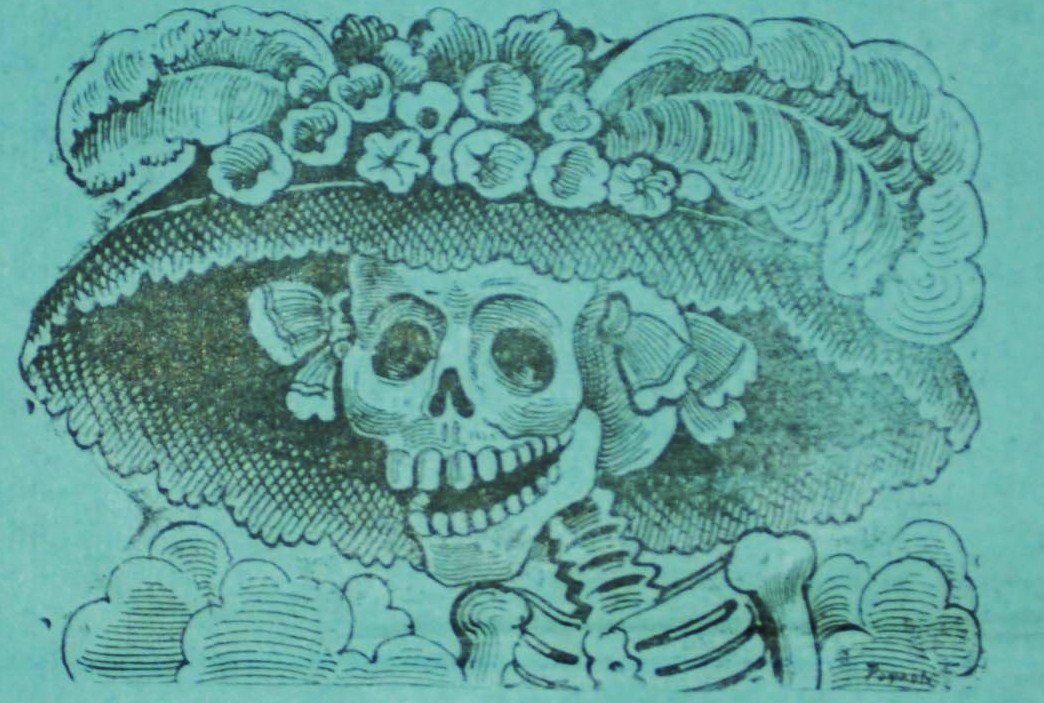
Happy Birthday to La Catrina (1912-2013), Jose Guadalupe Posada's Most Famous Calavera
Sunday, June 10, 2012
Jose Guadalupe Posada and Sensational Press Images

Thursday, September 22, 2011
Arsacio Vanegas Arroyo Honored in Mexico City: Part of the Legacy of Antonio Vanegas Arroyo and JG Posada

Subscribe to:
Posts (Atom)