
Originally our blog followed the documentary film Searching for Posada--ART and Revolutions and it still does but now reports the latest José Guadalupe Posada events, exhibitions, film screenings and more from the Posada Art Foundation and others! www.posada-art-foundation.com
Showing posts with label Grababos. Show all posts
Showing posts with label Grababos. Show all posts
Sunday, October 11, 2026
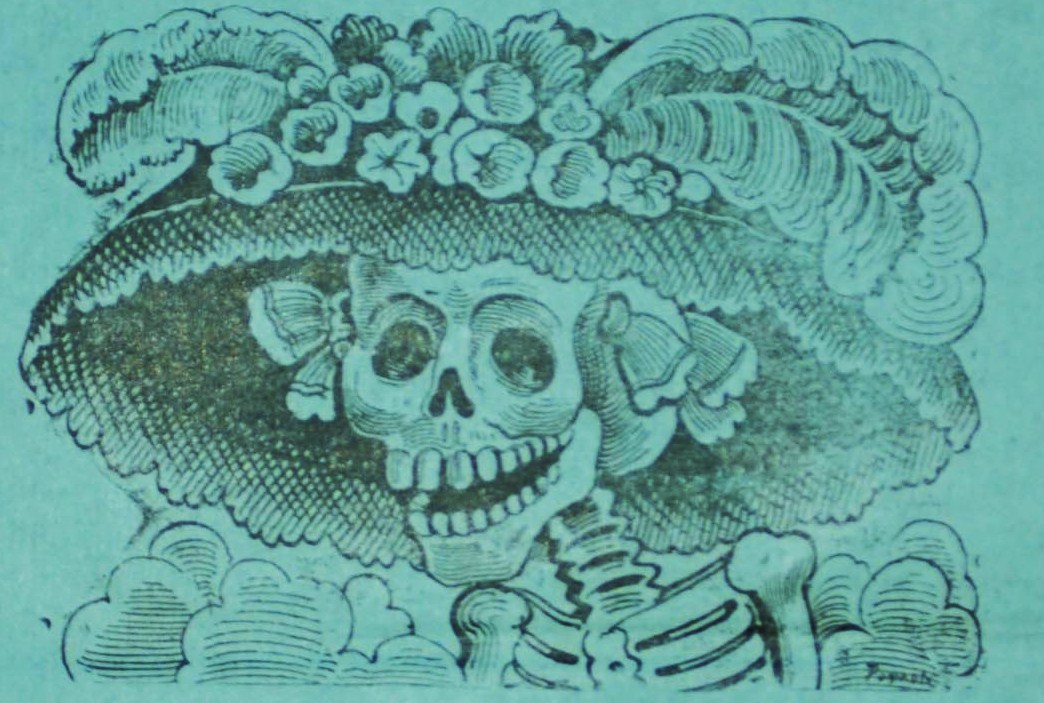
La Calavera Catrina: Who She Is: An Opinion
This opinion was inspired by travel writer Hannah Cooper, who asked some great questions about La Calavera Catrina
hannah@matadornetwork.com matadornetwork.com
La Catrina is often presented to visitors as an ancient Mexican symbol. How should
we distinguish between Posada’s early-20th-century creation and the older
Mesoamerican traditions and imagery of calaveras that are sometimes associated
with her?
La Calavera Catrina is a modern satirical image and symbol reminding us that no matter
how much money we might have or our station in life, that it is vanity to believe that with
all these worldly things, that we are somehow immune to death. The phrase memento
mori comes to mind, which to some offers a call reminding us to live fully and perhaps
that we should live with respect and kindness for each other, after all, we all die. Given
the moralizing tendency of Posada’s main publisher, Antonio Vanegas Arroyo, that may
have been the main message of the calavera images that he published. Simply, La
Calavera Catrina poked fun at the folly of the human condition tendency to put on airs.
Today a calavera Elon Musk might be depicted as a calavera driving a Tesla into a
recycling center or maybe a calavera Jeff Besos might be making deliveries from an
Amazon delivery truck.
Regarding the traditions of Mexico’s Aztecs, some try to make the connection or
comparison of Catrina with Mictēcacihuātl who was the consort or wife of Mictlantecuhtli
who ruled over Mictlan which is where the dead go once they leave the living. It has
nine levels and I could go on about Mesoamerican traditions but the connection for me
is limited in the sense that both the Aztecs and Posada use calavera images. The
modern use carries mor of a satirical message Posada’s images whereas the Aztec use
involves more religious traditions of the Aztec belief system. Maybe there is some help
in this article: https://www.posada-art-foundation.com/posada-s-day-of-the-dead
La Catrina appeared in broadsides alongside other calaveras.
How would contemporary readers have understood Posada's original use of the image?
I think contemporary understanding would have seen Posada’s images as funny and/or
with a biting satire.
When Posada’s contemporaries saw this image, what would they have understood
La Catrina to represent? Is that meaning substantially different from what La
Catrina represents to Mexicans and visitors today?
The appearance of La Calavera Catrina originally could be looked at as just another
calavera among dozens of others. She was a satirical look the middle class, upper class
or anyone putting on airs. As the Vanegas Arroyo descendants continued to use the
images Posada created, the calavera images were employed to illustrate a variety of
stories. Posada’s work debuted in a publication in 1930. That is the first use of the term
catrina (the female equivalent of a catrin or a dandy). Some say Diego Rivera used the
term and he was involved in the 1930 publication so maybe it is true. As I mention in the
online article Catrina went by other names (for example, La Cucaracha and
Garbancera).
Posada had his first exhibition in Mexico City at the Bellas Artes in 1943, it moved to
Chicago in 1944. Since then Posada’s work has been shown in countless places but it
wasn’t until Diego Rivera added a full body to La Calavera Catrina and put her next to
Posada in his 1947 mural “Dream of a Sunday Afternoon in Alameda Central Park” that
things began to change for La Calavera Catrina.
Rivera added Aztec elements to his version of La Calavera Catrina. Around her shoulders
is a feather boa but it has a rattleon one end and the head of a snake on the other,
it is clearly meant to represent the Mesoamerican deity of Quetzalcoatl (the feathered serpent).
It’s a rattlesnake which is known to cause death from its bite. Next look at fangs and
blood in the mouth of La Calavera Catrina. This depiction, more than anything connected her
to the realm of the dead. https://inba.gob.mx/recinto/46/museo-mural-diego-rivera
So where does this leave us? Well, times change and people in Mexico found that
things with La Catrina sold to tourists. Halloween influences, movies like Coco, the Book
of Life, Frida and James Bond in Spectre all play roles. Then there are the dress up like
Catrina, parties, contests and parades.
How do people see her now versus then? It was more simple then.


Thursday, August 1, 2019
Wednesday, December 27, 2017
Jose Guadalupe Posada: Legendary Printmaker of Mexico Exhibition

Catalina Island Museum exhibition open from Dec. 23, 2017 to April 8, 2018.
Mexican Art comes to Catalina Island for the first time in this exhibition celebrating Mexico’s most prolific artist. José Guadalupe Posada’s images captured all aspects of daily life in Mexico City from 1889-1913, directly influenced artist like Frida Kahlo and Diego Rivera, shaped the Mexican identity and continue to inform contemporary image making today. A wide representation of Posada’s work, including his famous Day of the Dead calaveras and the artist’s original printing plates, make up this first-of-its-kind exhibition.
The exhibition will feature text in English and Spanish.
Monday, May 1, 2017

Saturday, October 3, 2015
East Los Angeles College Screening September 30, 2015

Sponsored by the Chicana/o Department of East Los Angeles College the screening of ART and Revolutions attendance hit 250+ students, faculty and more! Great feedback from Chicana/o Studies students. Bring on the next College!
Photo: Attendees line up for mini-exhibition viewing.
Monday, September 3, 2012
Happy Birthday to La Catrina (1912-2013), Jose Guadalupe Posada's Most Famous Calavera
Subscribe to:
Posts (Atom)