
Originally our blog followed the documentary film Searching for Posada--ART and Revolutions and it still does but now reports the latest José Guadalupe Posada events, exhibitions, film screenings and more from the Posada Art Foundation and others! www.posada-art-foundation.com
Showing posts with label Arte de Mexico. Show all posts
Showing posts with label Arte de Mexico. Show all posts
Wednesday, June 10, 2026
Excellent Resource for Printed Works Published by Antonio Vanegas Arroyo
https://literaturaspopulares.org/ipm/w/Inicio/ENGExcellent
This link will allow you to access Ibero-American popular prints, mainly from the 19th and early 20th centuries,from Mexico. It is a significant depository of works published by Antonio Vanegas Arroyo containing the images made by Jose Gudalupe Posada and Manuel Manilla.


Monday, August 20, 2018
Lecture On JG Posada Sept 16, 2018 In Turlock, CA

Director of the Posada Art Foundation, Jim Nikas, will explore the life and artworks of Mexican printmaker and illustrator, José Guadalupe Posada. FREE!
Link for Directions: https://www.heyturlock.com/event/arts-lecture-jim-nikas/
Monday, October 23, 2017
San Jose State University Screening of Art and Revolutions
Screening of Art and Revolutions PLUS a traveling exhibition on Posada and the Penny Press!
Date and Time:
Thursday 12/7/17, 5:00pm-6:00pm
Art Lecture Hall, Room #133
Department of Art & Art History
San José State University
Located on 9th Street Plaza, SJSU Campus, San José, CA 95112
http://www.sjsu.edu/map/
LINK Below:
http://events.ha.sjsu.edu/art/events/documentary-screening-searching-posada-art-revolutions/
Thursday, February 26, 2015
Selected by the Sonoma International Film Festival 2015!

On March 28 in Sonoma, CA ART and Revolutions will screen. An exhibition of Posada's art is planned so please come! Details will be announced as times become available.
Wednesday, July 24, 2013
Filming on Location in Mexico

Tuesday, September 25, 2012
Noticia Muy Triste: Joaquina Vanegas Arroyo ha Fallecido

Monday, September 3, 2012
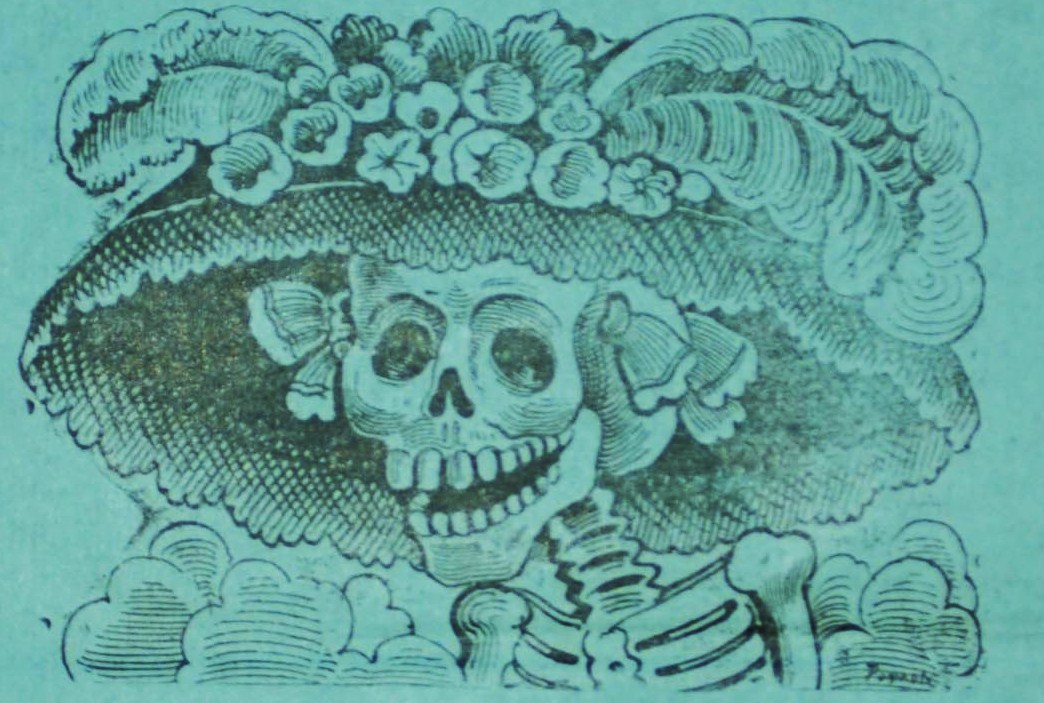
Happy Birthday to La Catrina (1912-2013), Jose Guadalupe Posada's Most Famous Calavera
Monday, April 30, 2012
Mexican Folkways, Frances Toor, Anita Brenner and Jose Guadalupe Posada

Subscribe to:
Posts (Atom)